
Press & Media
Press Kit
Skin and Grace I — Gazing Soft
Photobook & Documentary Film | 2026
Beyond Performance: Igor Mattio Explores Masculinity Through Cuba’s Male Ballet Dancers
A photographic and documentary investigation into masculinity, artistic discipline, identity, and the lives of four professional Cuban dancers.
NEW YORK, October 2026 — Artfineline presents Skin and Grace I — Gazing Soft, a photobook and accompanying documentary film by Italian-born, New York–based visual artist Igor Mattio.
Created during a ten-day journey through Cuba in November 2025, the project brings together four professional male ballet dancers—Erick, José Darío, Jonathan, and Jorge Evelio—in an investigation of masculinity, physical discipline, cultural expectations, and individual identity.
The 96-page hardcover photobook, published in an edition of 600 copies, is now available in the United States and Europe. The accompanying 53-minute documentary has completed editing, with final delivery expected in November 2026, ahead of submissions to international film festivals.
PROJECT OVERVIEW
The Macho and the Muse
Skin and Grace began with a question: What difficulties, if any, does a young man encounter when he chooses ballet as a profession in a culture where traditional expectations of masculinity remain deeply rooted?
How do families, friends, and communities respond to that choice? How do these men understand their own masculinity, and how does their perception of themselves evolve through years of physical discipline and artistic training?
Mattio originally conceived the project as an encounter between professional ballet dancers and athletes from sports more conventionally associated with masculine strength. The intention was not to contrast strength with grace, but to question the cultural assumptions that assign different meanings to different expressions of the male body.
The planned encounter did not unfold as expected. Only two athletes participated in a single day’s photography, and the larger collective journey could not be realized.
The project consequently evolved into a more concentrated investigation involving four dancers, each with a distinct personality, history, and relationship with ballet.
Over ten days, Mattio and his collaborators traveled through Cuba, working in ballet schools, abandoned architectural spaces, domestic interiors, courtyards, waterfalls, and coastal landscapes.
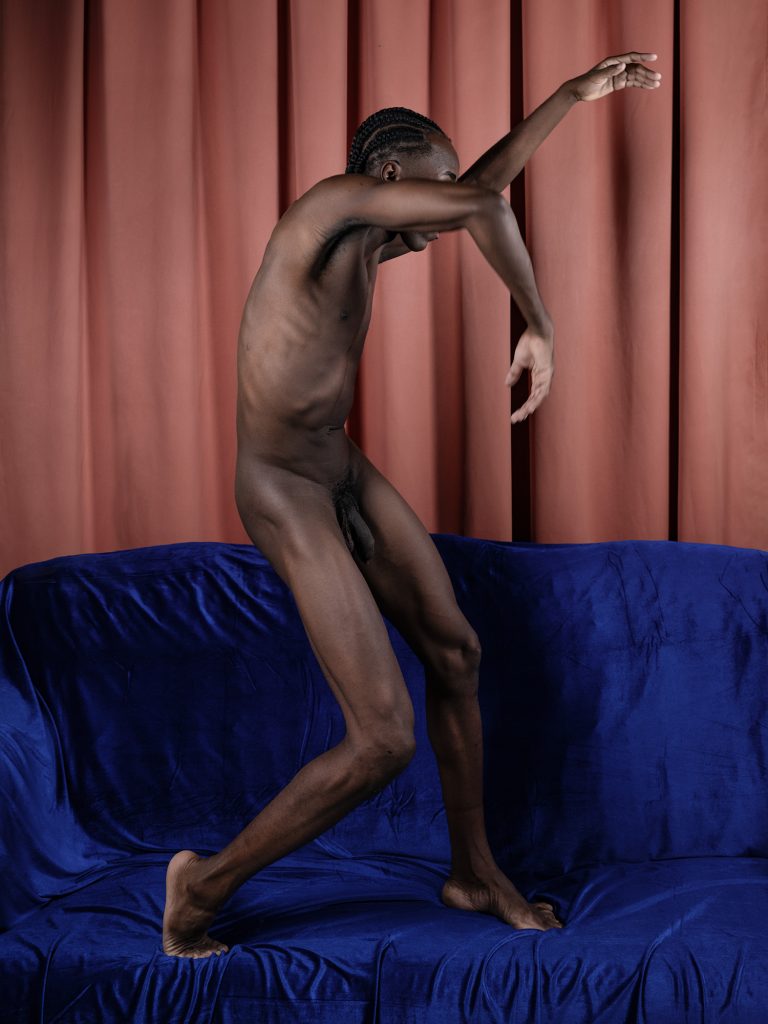
The photographs include constructed compositions in the deteriorating spaces of Havana’s art schools and on their rooftops, images created at the El Nicho waterfalls, scenes along the coast, and quieter portraits in which the dancers are simply present, without choreography or performance.
Their training remains visible in their posture, gestures, balance, and extraordinary physical control. Yet the photographs are not principally concerned with ballet technique.
They explore the individuals beyond that discipline.
Some images are deliberately theatrical, involving carefully chosen locations, compositions, and gestures. Others emerged spontaneously during travel, conversations, and time spent together. The dancers appear both clothed and nude, with nudity approached as a nonsexual element of Mattio’s broader artistic investigation of the male body.
The resulting images move between construction and unpredictability, between the artist’s intentions and the individuality of the person being photographed.
Rather than attempting to define Cuban masculinity through four dancers, Skin and Grace explores how four individuals negotiate the relationship between their bodies, artistic ambitions, personal histories, and the expectations of the society around them.
ARTIST STATEMENT
I went to Cuba to explore what it means for a young man to choose ballet in a society where traditional ideas of masculinity remain deeply rooted.
I wanted to understand how these men came to dance, how their families and friends reacted, what difficulties they encountered, if any, and how they see themselves today.
But I also went to Cuba to make photographs.
I am not particularly interested in photographing dancers as symbols of perfection, nor in documenting their technical accomplishments. Their discipline is extraordinary, certainly, but I am more interested in what happens beyond that discipline, when the body is no longer required to perform or demonstrate anything.
My photographs are constructed. I choose locations, establish compositions, suggest gestures, and sometimes create situations that would otherwise never have existed. I do not pretend that the camera is an innocent observer.
Yet within these constructions, something unexpected can happen. A gesture, an expression, an unanticipated reaction, a moment of hesitation or confidence may reveal something I had neither planned nor imagined.
That is what interests me.
The dancers bring their own personalities into the images. Their bodies carry years of training, but they are not merely instruments of that discipline. They are individuals, with different experiences, ambitions, uncertainties, and perceptions of themselves.
The documentary introduced another dimension to the work.
A photograph can suggest confidence, vulnerability, desire, or resistance, but it cannot establish what someone actually thinks or feels. The interviews allow the dancers to speak for themselves, sometimes confirming and sometimes contradicting the impressions created by the photographs.
I find that difference essential.
For me, photography is not necessarily a record of reality. It is a way of constructing an image that may reveal something beyond what was actually in front of the camera.
Skin and Grace is not an attempt to explain Cuban masculinity through four men. It is an encounter with four individuals whose experiences invite us to question some of the assumptions we make about masculinity, beauty, strength, and grace.
— Igor Mattio


ABOUT THE BOOK
Skin and Grace I — Gazing Soft
Artist: Igor Mattio
Publisher: Artfineline
Publication: 2026
Format: Hardcover photobook
Dimensions: 30.5 × 28 cm (12 × 11 in)
Pages: 96
Edition: 600 copies
Photographs: Black-and-white and color
Availability: United States and Europe
The photobook unfolds as a visual narrative in which the dancers move between constructed compositions, moments of spontaneous interaction, and encounters with unfamiliar environments.
The sequencing alternates between individual portraits, group compositions, movement, stillness, architecture, and landscape. Rather than presenting the dancers through the conventional visual language of ballet, Mattio places them in situations where their bodies interact with spaces that have no predetermined relationship to their professional discipline.
An abandoned building, an empty classroom, a waterfall, or an exposed rooftop becomes more than a setting. Each introduces a different relationship between the body, its surroundings, and the image being constructed.
The dancers’ physical training is unmistakable, but their individuality remains central. A body capable of extraordinary control can also appear uncertain, vulnerable, relaxed, or unexpectedly playful.
The photographs do not attempt to document ballet as an institution, nor do they propose a definitive interpretation of the dancers’ identities.
Instead, they explore how much a photograph can suggest about a person—and how much inevitably remains beyond the image.
The use of both black-and-white and color reflects Mattio’s interest in different visual interpretations of the human body, gesture, and physical space.
The book is currently available for purchase in the United States and Europe, with European fulfillment handled through Artfineline’s local distributor.
Book information and orders:
https://artfineline.com/skin-and-grace-ep-i-order-page/
ABOUT THE FILM
Skin and Grace I — Documentary
Director: Igor Mattio
Production: Artfineline
Filmed: Cuba, November 2025
Original Score: Stefano Maccagno
Format: Feature-length documentary, approximately 60 minutes
Language: Spanish
Completion: Final master expected November 2026
Distribution: International film festival submissions planned
The documentary extends the photographic investigation into sound, movement, conversation, and time.
While the photobook presents images constructed through Mattio’s visual interpretation, the film gives the dancers the opportunity to articulate their own experiences.
At its center are four individual interviews in which Erick, José Darío, Jonathan, and Jorge Evelio discuss their beginnings in ballet, the reactions of family and friends, their personal ambitions, the challenges they have encountered, and their relationships with masculinity and social expectations.
Their accounts are personal rather than representative. They do not speak on behalf of Cuban dancers collectively, nor do their experiences necessarily lead to the same conclusions.
The documentary features an original score composed by Stefano Maccagno specifically for the film. Working closely with the images, Maccagno crafted the music scene by scene, developing a musical language that responds to the dancers’ movements, the changing environments, and the emotional rhythms of the journey.
The relationship between music and movement is particularly evident in four improvised choreographies: Erick and José Darío at the ballet school, Jorge Evelio on the terrace, all four dancers on the roof of the Instituto Superior de Arte (ISA), and Jonathan, José Darío, and Jorge Evelio at the El Nicho waterfalls.
In each sequence, Maccagno’s compositions respond to movements that were never choreographed to his music, creating a dialogue between the dancers’ spontaneity and the composer’s interpretation.
The film combines:
Four individual interviews with the dancers
A collective conversation involving the dancers and Mattio
Observational footage from the journey
Constructed photographic and filmed sequences
Rehearsal and movement material
Travel and environmental footage
Behind-the-scenes moments from the photographic sessions
The documentary also reveals aspects of the relationship between artist and subject that remain invisible in the finished photographs.
Directions, negotiations, moments of uncertainty, spontaneous reactions, and the gradual development of trust become part of the narrative.
The distinction between what the photographs suggest and what the dancers actually say is central to the film.
An image may invite the viewer to interpret a gesture as vulnerability, confidence, resistance, or desire. The person photographed may understand that same moment very differently.
Rather than resolving these differences, the documentary allows them to coexist.
The film also reflects the unpredictability of the journey itself. The original plan changed as participants withdrew and practical difficulties intervened, requiring the project to evolve in response to circumstances rather than follow a predetermined script.
Ultimately, Skin and Grace is not a documentary about ballet technique or performance.
It is about the men who have chosen ballet, their experiences growing up, the expectations surrounding them, and the ways they understand themselves today.
Editing of the documentary has been completed, with final adjustments and delivery expected in November 2026.
The film is being prepared for submission to international film festivals. Premiere, screening, and distribution details will be announced when confirmed.
ABOUT THE ARTIST
Igor Mattio is an Italian-born visual artist based in New York. His practice encompasses photography, film, mixed media, artist books, and publishing, with a longstanding interest in the human body and the ways identity is constructed, performed, revealed, and interpreted through images.
Mattio studied at the Accademia Albertina di Belle Arti in Turin, where his education included painting, photography, art history, and sculpture.
He began working with photography in the 1980s, initially incorporating photographic images into collage, photocopy, painting, and chemically altered mixed-media works.
Photography subsequently became central to his artistic practice, although he continues to approach it as a means of constructing images rather than simply recording appearances.
His recent investigations concentrate particularly on the male body, masculinity, youth, cultural identity, vulnerability, and the relationship between the photographed subject and the person behind the image.
Working through extended encounters and collaborations, Mattio frequently combines deliberate staging with spontaneous gestures and unpredictable interactions.
His previous photobook, Skin and Under (2025), explored young masculinity across different cultural environments, examining the tensions between socially constructed masculine identities and the individuality, vulnerability, and complexity of the people photographed.
Mattio works with both digital and traditional photographic processes and continues to produce black-and-white photographs as gelatin silver prints.
He is also the founder of Artfineline, an independent publishing and production platform dedicated to artist-driven photography books, limited editions, and documentary projects.
Artist website: https://www.igormattio.com/
Selected Coverage:
KEY THEMES
- Masculinity and social expectation: How cultural assumptions influence the ways men understand themselves and are perceived by others.
The body shaped by discipline: The physical and psychological presence of years of ballet training.
Grace beyond performance: The relationship between professional technique and the gestures of everyday life.
Identity and self-presentation: The difference between how a person presents himself, how an artist portrays him, and how others interpret the resulting image.
Strength and vulnerability: Qualities that may coexist rather than function as opposites.
Beauty, desire, and physical presence: The meanings assigned to the male body within different social and visual contexts.
The constructed photograph: The relationship between artistic intention, staging, spontaneity, and the unpredictable presence of the subject.
Collaboration and trust: The negotiations and shared experiences involved in creating the photographs and film.
Photography and documentary film: Two different ways of approaching the same people, each revealing possibilities and limitations of the other.
PRESS CONTACT
Artfineline — Press & Media
Email: press@artfineline.com
Website: https://www.artfineline.com/
Artist: https://www.igormattio.com/New York, USA
PRODUCTION
Skin and Grace I was photographed and filmed in Cuba in November 2025 during a ten-day journey involving four professional male ballet dancers and a small production team.
Locations included Havana’s ballet and art schools, architectural and domestic settings, the El Nicho waterfalls, and coastal landscapes.
Originally conceived as a collaboration between ballet dancers and athletes, the project evolved during production into a more focused investigation of the four participating dancers.
The resulting photographic and documentary works were created through a combination of carefully constructed images, interviews, observational footage, and shared experiences.
Photobook: Published in 2026 by Artfineline, 96 pages, edition of 600 copies. Available in the United States and Europe.
Documentary: Approximately 60 minutes. Editing completed; final delivery expected November 2026. International festival submissions planned.
Skin and Grace forms part of Mattio’s continuing artistic investigation into masculinity, identity, and the human body.
PRESS IMAGES & MEDIA RESOURCES
A selection of photographs from Skin and Grace I is available for editorial review.
High-resolution files, image captions, and additional press information may be requested from Artfineline.
Selected photographs:
https://artfineline.com/skin-and-grace-selected-images/
Photobook information and orders:
https://artfineline.com/skin-and-grace-ep-i-order-page/
Artist information:
https://www.igormattio.com/
All photographs © Igor Mattio. Courtesy of the artist and Artfineline.
Reproduction for editorial coverage requires appropriate image credit and authorization.